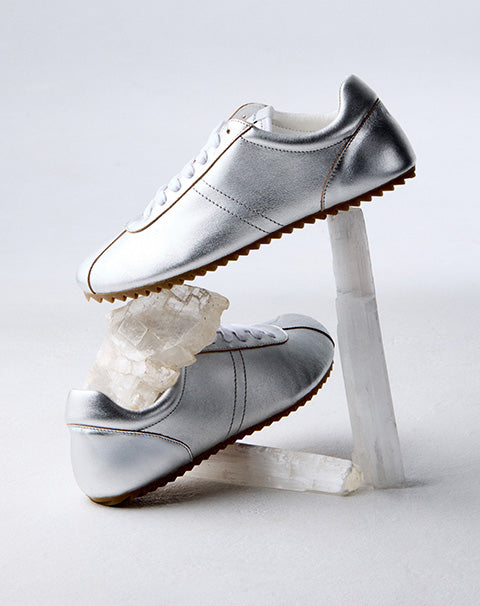
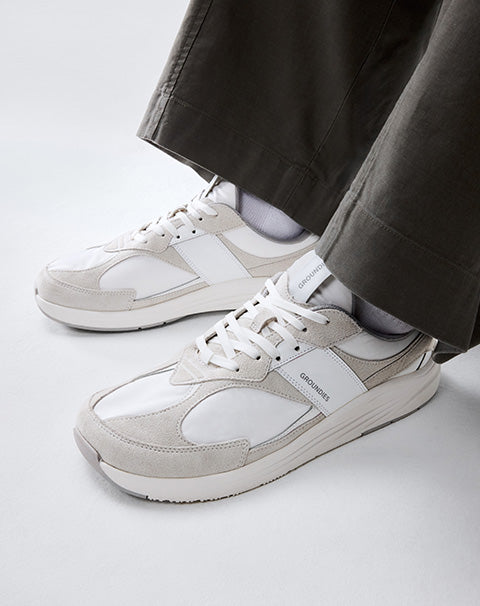
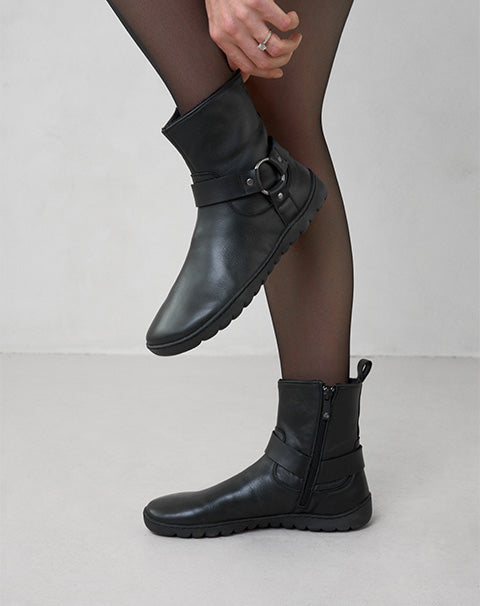
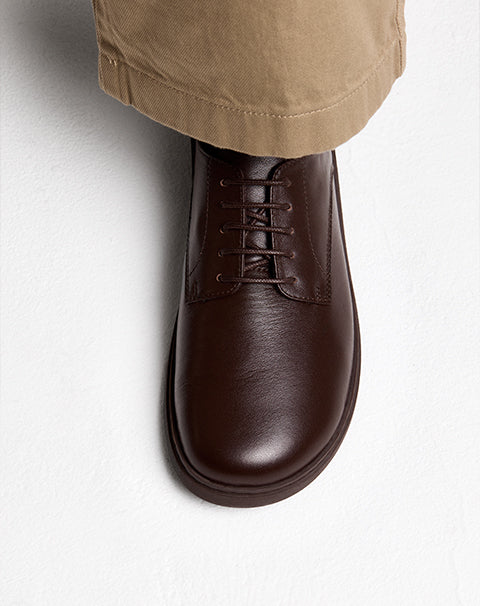
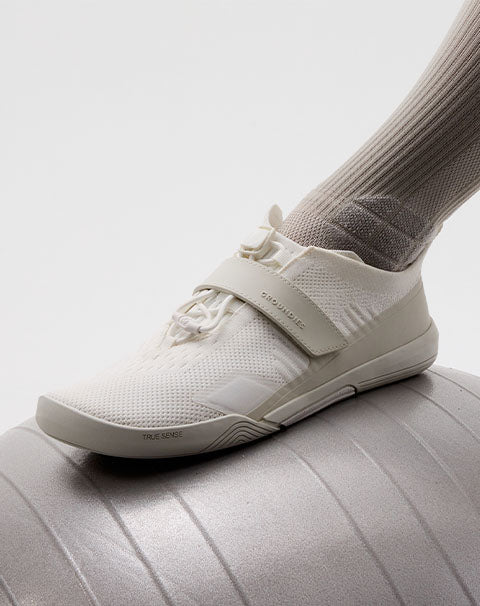
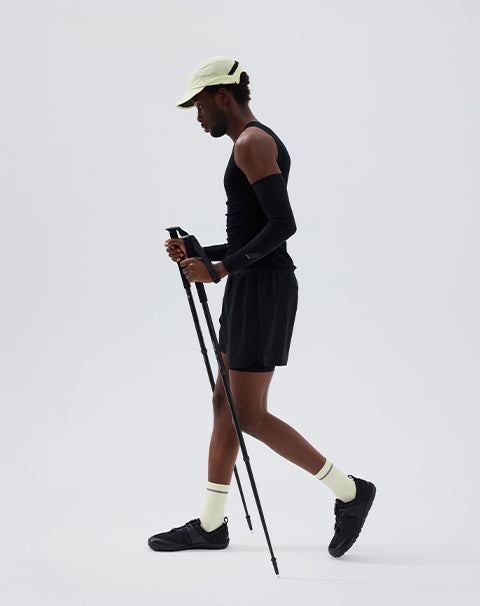
Barefoot isn't
a trend. It's
anatomy. 

AI Generated

Barefoot isn't
a trend. It's
anatomy. 

AI Generated

Your foot is already high-performance.

26 bones. 33 joints. A complex interplay of muscles, tendons and ligaments. Our feet stabilize us, cushion impacts, respond to the ground beneath us and constantly provide our bodies with information about movement and position. 

Your foot is already high-performance.

26 bones. 33 joints. A complex interplay of muscles, tendons and ligaments. Our feet stabilize us, cushion impacts, respond to the ground beneath us and constantly provide our bodies with information about movement and position. 

Your foot is already high-performance.

26 bones. 33 joints. A complex interplay of muscles, tendons and ligaments. Our feet stabilize us, cushion impacts, respond to the ground beneath us and constantly provide our bodies with information about movement and position. 

Traditional Shoes Traditional
Shoes
Barefoot Shoes Barefoot
Shoes
Heel drop Raised heel (heel drop) Raised heel (heel drop) No heel drop (Zero Drop) No heel drop (Zero Drop)
Toe box Narrow toe box Narrow toe box Anatomical toe box Anatomical toe box
Cushioning Strong cushioning Strong cushioning Thin, flexible sole Thin, flexible sole
Flexibility Stiff sole Stiff sole Lightweight construction Lightweight construction
Ground feel Lack of ground feel Lack of ground feel Natural feel for the ground Natural feel for the ground

Less shoe. More you. 

A good shoe doesn't need to be able to do more than your foot.
It just needs to give your foot the space to do what it's made to do.

Less shoe.
More you.

Many conventional shoes
alter the natural shape and
function of the foot – often without
us even realizing it.

Anatomical toe box

Anatomical toe box

Gives your toes room to splay naturally – for greater stability and balance.

Zero Drop

Zero Drop

No heel lift – for a natural body alignment and posture.

Flexible design

Flexible design

So the foot can move freely and feel the ground directly.

Thin sole

Thin sole

Stimulates sensory perception through the feet – for balance, coordination and body awareness.

Holistic well-being
from the ground up. 

Our holistic approach to health: exercise, balance, recovery and mental well-being belong together. Our feet build the foundation – they influence how we stand, move and perceive our bodies. That's why natural movement is more than just foot health. It's part of our overall well-being. 

  • Stability & balance
  • Strong feet
  • Agility & mobility
  • Body awareness & coordination
  • Mental well-being

Holistic well-being
from the ground up. 

Our holistic approach to health: exercise, balance, recovery and mental well-being belong together. Our feet build the foundation – they influence how we stand, move and perceive our bodies. That's why natural movement is more than just foot health. It's part of our overall well-being. 

  • Stability & Balance
  • Strong feet
  • Agility & mobility
  • Body awareness & coordination
  • Mental well-being

Natural Movement: A Medical Perspective.

What happens in the body when our feet regain space, mobility and sensory feedback? Our experts explain how foot function, movement, and well-being are connected.

Back to movement.
Step by step.

New freedom of movement also means new
exertion. Give your feet and your body time to
adjust – step by step and at
your own pace.

  • Start slowly Begin with short
    wear times.
  • Build up gradually Gradually increase wear time and the level of activity.
  • Listen to your body Give yourself and your feet time to adjust.
  • Move naturally Reintroduce natural movement
    into your daily routine. 
Back to movement. Step by step. 

New freedom of movement also means new exertion. Give your feet and your body time to adjust – step by step and at your own pace.

  • Start slowly Begin with short
    wear times.
  • Build up gradually Gradually increase wear time and the level of activity.
  • Listen to your body Give yourself and your feet time to adjust
  • Move naturally Reintroduce natural movement
    into your daily routine. 
Experience the difference.

26 bones. 33 joints. And a shoe that gives them the space
to do what they’re made for. Try Groundies for 14 days
in real-life – even outdoors. If you're not convinced,
you can simply return them.

Experience the
difference.

26 bones. 33 joints. And a shoe that gives them the space to do what they were made to do. Try Groundies for 14 days in real-life – even outdoors. If you're not convinced, you can simply return them. 

Frequently asked questions about barefoot shoes
What are barefoot shoes?

Barefoot shoes are designed to mimic the natural shape and function of the foot. They typically feature an anatomical toe box, Zero Drop and a thin, flexible sole that allows for natural movement and direct ground feel.

Are barefoot shoes healthy?

In general, barefoot shoes are designed to support the foot’s natural function and allow for more natural movement, rather than unnecessarily restricting it. As with any shoe, individual needs and circumstances may vary.

What is the difference between barefoot shoes and regular shoes?

With barefoot shoes, the anatomy of the foot dictates the design. A wide toe box, a thin and flexible sole and a natural alignment of the foot give it more room for natural movement and allow for a natural, stance that serves as the foundation for our entire body’s posture, balance and movement.

What does “Zero Drop” mean in the context of barefoot shoes?

"Zero Drop" means that the heel and forefoot are at the same level. The shoe therefore creates no additional height difference between the heel and the forefoot. This promotes a natural stance and a more even distribution of stress on the musculoskeletal system.

Are barefoot shoes suitable for beginners?

Yes. If you've mostly worn conventional shoes up until now, you should start slowly and gradually increase the amount of time you wear them as well as the level of activity though. This gives your feet and body time to adapt to the changes in movement and stress. You can find out how to make the switch properly here: Your guide for the first days in barefoot shoes

How long does it take to get used to barefoot shoes?

That depends on the individual. Instead of sticking to a set time frame, it’s important to listen to your body, start short wear times and gradually increase them. You can find tips on transitioning to barefoot shoes here: Your guide for the first days in barefoot shoes

Can you wear barefoot shoes every day?

Yes, barefoot shoes can be worn every day. However, especially during the adjustment period, the amount of time you wear them should be tailored to how quickly you get used to them and how your body feels.

Can you wear socks with barefoot shoes?

Yes, of course. “Barefoot” refers to the shoe’s design – it doesn’t mean you have to wear it without socks. The ideal socks are ones that also give your toes plenty of room to move.

Can you wear barefoot shoes if you have foot deformities?

That depends on the type and severity of the foot deformity, as well as any associated symptoms. If you are experiencing pain, have a severe deformity, or have an orthopedic condition, you should consult a doctor or physical therapist to determine whether barefoot shoes are appropriate for you.

Can you wear barefoot shoes if you have hallux valgus?

An anatomically shaped toe box provides plenty of room for the forefoot and toes and prevents the additional pressure caused by tight, pointed shoes. Whether barefoot shoes are suitable for someone with hallux valgus depends on the severity of the condition and the associated symptoms; in cases of more severe symptoms, a professional evaluation is recommended.

Can you wear barefoot shoes if you have flat feet or fallen arches?

Having flat feet or fallen arches does not rule out wearing barefoot shoes. The key factors are individual foot function and any potential symptoms. If you experience pain, stiffness, or new changes, it is recommended that you first seek a professional evaluation.

Can you wear barefoot shoes with insoles?

That depends on the insole and its purpose. Anyone who wears orthotics should consult with their healthcare provider to determine which shoes and combinations are best suited to their individual needs.