The Longevity Blindspot:
Why we should pay more attention to our feet.


Together with medical experts, we take a look at the foundation of our movement – and at why our feet deserve more attention.

An underestimated foundation.

26 bones, 33 joints and a complex interplay of muscles, tendons and ligaments: our feet are anatomical high-performance structures. They absorb our body weight, cushion loads, adapt to different surfaces and provide our nervous system with important information about our position and underground.

Yet still, we pay them surprisingly little attention in everyday life. While we specifically train our back or core muscles and concern ourselves with nutrition, regeneration and mental well-being, the health of our feet is often left out.

Although, movement begins right here.

Together with Dr. Martin Weiß and Stephan Wilkes, we are address the fundamental question: What can we do for our feet before they cause us problems?

Groundies Movement Lab

Medical expertise meets a new perspective on movement.

With Dr. Martin Weiß and Stephan Wilkes, we bring medical perspectives into the dialogue about foot health and natural movement.

We are interested in how our feet work, what keeps them healthy and what role they play in our whole-body well-being. This knowledge also helps us to critically question and further develop the basic principles of our shoes.


In conversation with our experts:

Our feet can do more than carry us.

Our feet are not just passive contact points to the ground. They are actively involved in our movement.

Through numerous sensory receptors in the sole of the foot, we perceive pressure, touch and changes in the ground. Our nervous system processes this information together with signals from muscles, joints and the organ of balance. This allows us to continuously adjust our posture and movements.

At the same time, the foot muscles help control loads, coordinate movements and are also connected with the rest of the body.

Therefore, foot health is about more than just being pain-free. It includes mobility, resilience, strength and the ability to adapt to different demands.

What happens when we move our feet less?

Our feet are designed for movement. Like other parts of our musculoskeletal system, their muscles and tissues respond to regular exercise and training.

An everyday life with little movement variation can cause certain abilities to atrophy. This does not automatically mean that complaints will arise. However, it shows why different movement stimuli, sufficient mobility and appropriate stress on the foot muscles are important.

Our shoes also play a role. Their shape and construction influence how much room the toes have, how the foot can move and how we perceive contact with the ground.

Important here is not the shoe alone, but the interaction of individual preconditions, stress, movement and habituation.

Why prevention starts with the foot.

We don't have to wait for pain to address our foot health.

Even small changes in daily life can help activate our feet: regular exercise, varied surfaces, targeted exercises for the foot muscles and shoes that match our individual foot shape and activity.

The goal is not to stress our feet as much as possible, but to provide them with appropriate movement stimuli. Those who do not walk barefoot often or wear very stiff shoes should gradually increase new activation.

Healthy movement is not a matter of giving as much or as little support as possible, but of what our body individually needs.

It's not a trend. It's anatomy.

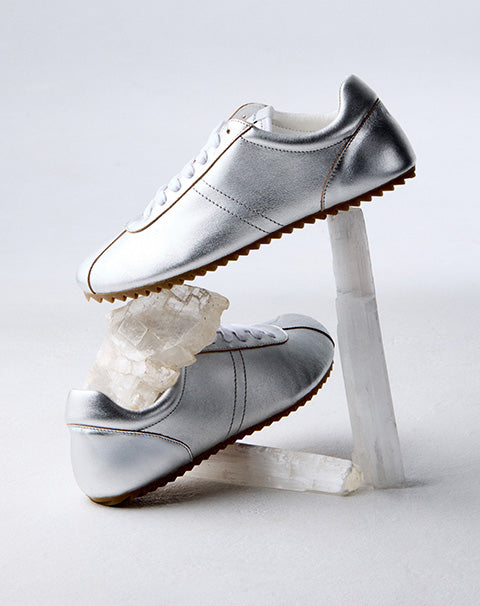
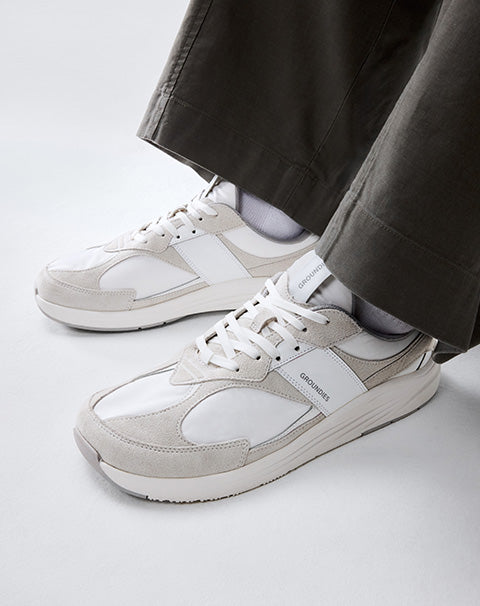
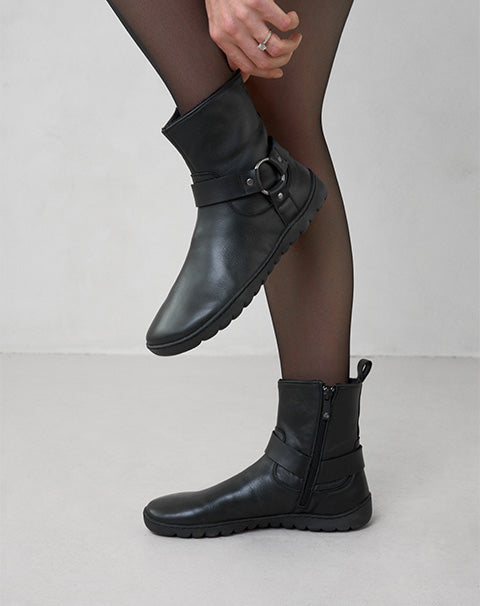
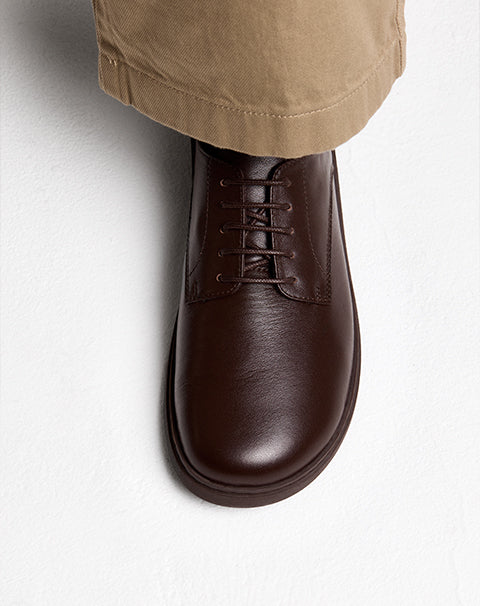
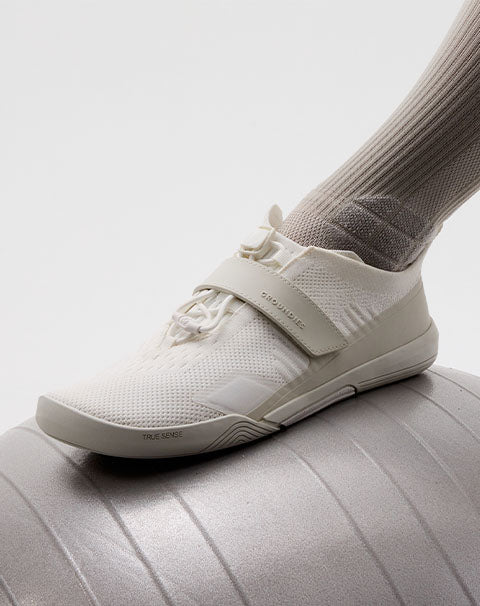
At Groundies, we develop shoes based on the anatomy of the human foot. With a foot-appropriate shape, flexible soles and without artificial heel drop, we aim to support natural movement possibilities in everyday life.

Engaging with medical expertise is an important part of this approach for us. Because anyone who wants to rethink footwear should first understand how our feet work.

And why it is worth paying attention to them long before they hurt.

Why prevention starts with the foot.

We don't have to wait for pain to address our foot health.

Even small changes in daily life can help activate our feet: regular exercise, varied surfaces, targeted exercises for the foot muscles and shoes that match our individual foot shape and activity.

The goal is not to stress our feet as much as possible, but to provide them with appropriate movement stimuli. Those who do not walk barefoot often or wear very stiff shoes should gradually increase new activation.

Healthy movement is not a matter of giving as much or as little support as possible, but of what our body individually needs.

It's not a trend. It's anatomy.

At Groundies, we develop shoes based on the anatomy of the human foot. With a foot-appropriate shape, flexible soles and without artificial heel drop, we aim to support natural movement possibilities in everyday life.

Engaging with medical expertise is an important part of this approach for us. Because anyone who wants to rethink footwear should first understand how our feet work.

And why it is worth paying attention to them long before they hurt.