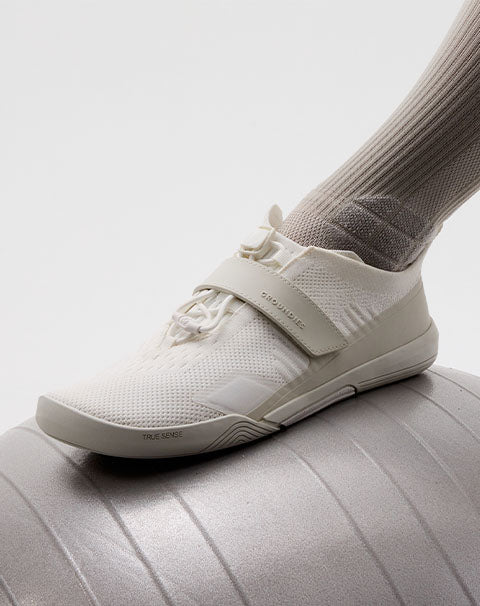
Grounded Conversations: Designer Lea Rösch on personal style and why great design always starts with people.

Berlin-Kreuzberg. A quiet morning. Surrounded by leather, sketches and finished bags, designer Lea Rösch welcomes us into her studio. Over a cup of tea, we talk about design. About style, About the objects we choose to keep. And about why some things stay with us for years, while others quietly disappear. For Lea, great design doesn't start with its shape. Nor with function alone.

"A product that's only aesthetically pleasing annoys me. But I also don't like something that's purely functional. In the end, there's always something irrational about it."

It's the moment when function, aesthetics and emotion come together that turns a product into something more than something we simply use. It becomes part of everyday life. Something we instictively reach for without giving it a second thought. Our conversation soon turns to the topic of personal style.

"I've always found personal style in itself fascinating because it can look so different for everyone. And there's something incredibly liberating about finding your own."

Lea tells us about an olive-green wool sweater that once belonged to her mother, was also worn by her father, and has now become one of her own favorite pieces. She talks about a bag she designed for herself eleven years ago and still carries today. Stories like these remind us that the things closest to us are often the ones that quietly become part of our everyday lives. When the conversation turns to shoes, Lea captures this thought in a nutshell:

"It definitely has to be comfortable because I walk and stand a lot. But no matter how comfortable it is, I would never wear it, if it didn't at least look a little cool."

Grounded Conversations: Designer Lea Rösch on personal style and why great design always starts with people.

Berlin-Kreuzberg. A quiet morning. Surrounded by leather, sketches and finished bags, designer Lea Rösch welcomes us into her studio. Over a cup of tea, we talk about design. About style, About the objects we choose to keep. And about why some things stay with us for years, while others quietly disappear. For Lea, great design doesn't start with its shape. Nor with function alone.

"A product that's only aesthetically pleasing annoys me. But I also don't like something that's purely functional. In the end, there's always something irrational about it."

It's the moment when function, aesthetics and emotion come together that turns a product into something more than something we simply use. It becomes part of everyday life. Something we instictively reach for without giving it a second thought. Our conversation soon turns to the topic of personal style.

"I've always found personal style in itself fascinating because it can look so different for everyone. And there's something incredibly liberating about finding your own."

Lea tells us about an olive-green wool sweater that once belonged to her mother, was also worn by her father, and has now become one of her own favorite pieces. She talks about a bag she designed for herself eleven years ago and still carries today. Stories like these remind us that the things closest to us are often the ones that quietly become part of our everyday lives. When the conversation turns to shoes, Lea captures this thought in a nutshell:

"It definitely has to be comfortable because I walk and stand a lot. But no matter how comfortable it is, I would never wear it, if it didn't at least look a little cool."

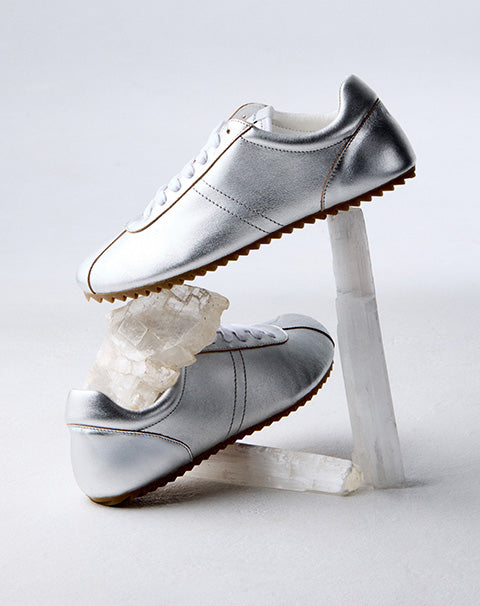
Comfort and expression belong together. It is their balance that turns a shoe into something people choose to wear every day. This mindset shapes the entire conversation. But it also shapes Lea's belief that designers and brands share a responsibility to create products that actually respond to the needs of the people who wear them. When Lea tries on our ballet flat Curve for the first time, she doesn't describe it by its shape or its materials. She describes a feeling:

"It actually reminds me a little of my ballet days. It's the kind of shoe you barely even feel, yet still makes a statement."

And then there's this one sentence that makes us incredibly proud:

"I'd choose this one every time."

We believe that's the true quality of great design. It becomes part of everyday life. It accompanies routines, memories and moments without demanding attention. It leaves room for personality and moves naturally with the people who wear it.

Style should accompany everyday life. It should move with people.

That's where design has its greatest impact.

Comfort and expression belong together. It is their balance that turns a shoe into something people choose to wear every day. This mindset shapes the entire conversation. But it also shapes Lea's belief that designers and brands share a responsibility to create products that actually respond to the needs of the people who wear them. When Lea tries on our ballet flat Curve for the first time, she doesn't describe it by its shape or its materials. She describes a feeling:

"It actually reminds me a little of my ballet days. It's the kind of shoe you barely even feel, yet still makes a statement."

And then there's this one sentence that makes us incredibly proud:

„Ich würde den immer wählen.”