Minimalist shoes are trendy—how healthy are barefoot shoes?
It is well known that barefoot shoes have "less going for them" than cushioned shoes. So what makes a good
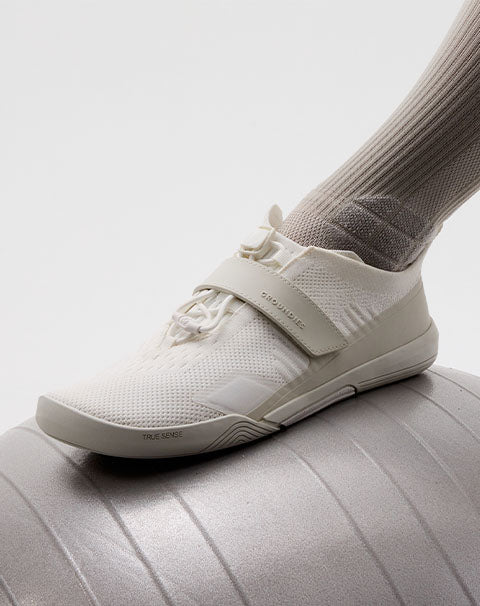
Barefoot shoes? At Groundies, barefoot shoes have three main features:
- A zero heel and thus a flat sole without a heel for straight body alignment
- A thin and flexible sole for greater contact and sensitivity
- A wide toe box for greater stability and freedom of movement
As you can already see from these three characteristics of barefoot shoes, Groundies follows the principle of "less is more" in the production of everyday shoes. Why can walking barefoot be healthy? Five health benefits of barefoot shoes provide the answer:
- Barefoot shoes promote the natural rolling motion of our feet.
- This strengthens the foot muscles and the arch of the foot.
- Greater sensitivity, promoting mindful and conscious walking
- Flat standing and walking enables straight body alignment.
- Barefoot shoes can also prevent or counteract foot deformities.
As a general rule, the following applies to healthy barefoot shoes: the more the foot itself
has to work, the more actively it is trained over time. Modern, stiff shoes in particular are often counterproductive here, as the foot is usually so "cramped" or over-stabilized that it atrophies over time. Barefoot shoes, with their flexibility, provide targeted training for the foot muscles. This also makes barefoot shoes ideal for children.
How healthy are barefoot shoes really?
Healthy barefoot running #1 – the rolling motion
One of the most important differences between barefoot shoes and conventional shoes is the rolling motion of our feet. The sole of barefoot shoes is significantly thinner and more flexible, allowing the feet and toes to perform their natural function better when walking. Because the sole is also thin in the heel area, the rolling motion is not determined by the shape of the shoe or sole, but follows its natural course. A well-trained foot will therefore cushion a step just as well as a thick sole would. However, this has the advantage of putting less strain on the joints in the long term.
Healthy barefoot walking #2 – strengthening the foot muscles
Minimalist shoes and barefoot shoes have significantly thinner and more flexible soles. However, this also means that the foot has to work harder, whether walking normally or balancing on uneven ground. Both the foot and leg muscles are used much more when running in barefoot shoes, providing targeted training. For people with flat feet, for example, this has the advantage of allowing them to rebuild their arches in the long term. In general, stronger foot muscles can also significantly reduce the risk of twisting your ankle. In addition to adults, barefoot shoes are also well suited for children to counteract foot deformities at an early age.
Healthy barefoot walking #3 – greater sensitivity and mindfulness
The thin sole in barefoot shoes provides more ground contact and thus also more sensitivity. All our Groundies are equipped with a minimal sole, which allows you to feel the ground particularly intensely with your heel, ball, and toes when running. Grass, roots, stones, and even the temperature of the ground are transmitted directly and noticeably to your feet, giving you a new awareness of the ground. This also leads to a more mindful gait, as you are now paying more attention to the ground. Experience with barefoot shoes has also shown that runners slow down when wearing them.
Healthy barefoot walking #4 – straight body alignment thanks to flat standing
Wearing barefoot shoes is also healthy because they enable a straight and upright posture. Groundies barefoot shoes have no Heel Drop, meaning no heel. By allowing the feet to stand flat on the ground from heel to toe, the body assumes a straight alignment. Standing and walking upright is the most natural form of movement, which also has a positive effect on joints, knees, hips, and back. In the long term, barefoot shoes can help reduce or even prevent back and joint pain.
Healthy barefoot walking #5 – Preventing and counteracting misalignments
Once you've discovered the benefits of healthy barefoot shoes, Groundies offers a wide range of barefoot shoes for women and barefoot shoes for men. All our models feature a wide toe box, giving your feet plenty of freedom of movement. There's also plenty of room for your big toe, which is usually cramped in conventional shoes. Hallux vagus or hammer toe are just two examples of typical foot deformities that can be attributed in part to wearing shoes that are too tight. Barefoot shoes have the advantage that all toes can spread evenly in all directions. This not only ensures a healthy foot position, but also provides more stability and balance in everyday life.