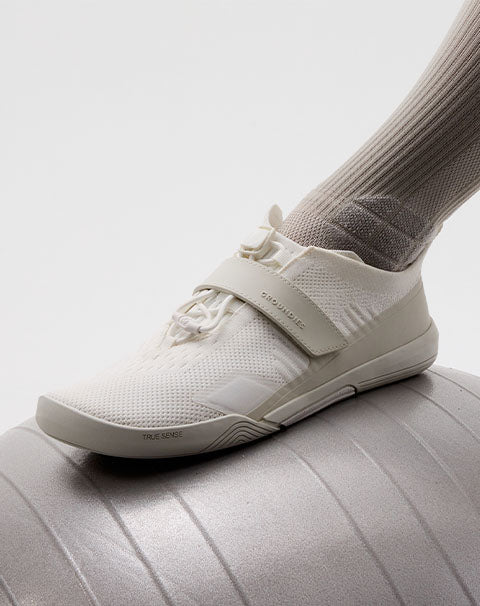
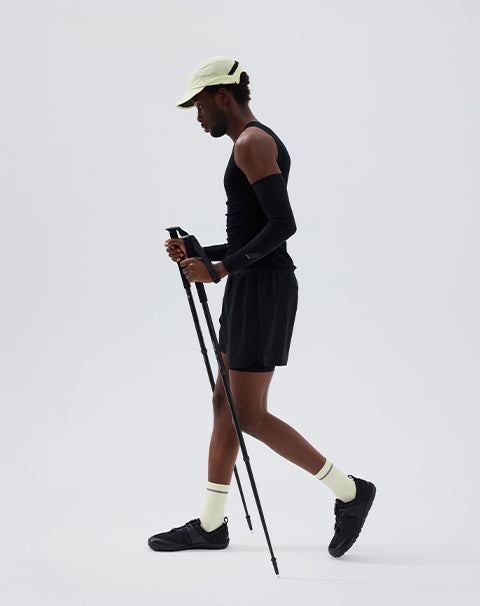
With both feet firmly on the ground: zero heel

One feature that distinguishes barefoot shoes from "normal" shoes is their thin and completely flat sole. Barefoot shoes deliberately do without a heel-to-toe drop. This refers to the difference in height between the heel and the forefoot. In contrast, almost all conventional shoes have a raised heel—not only high heels, but also everyday shoes for men and most running shoes.

Why is this bad? The elevation puts unnatural strain on the forefoot: while walking barefoot, only 10% of the body weight is placed on the forefoot and toes, but wearing heels shifts the weight. The forefoot is subjected to excessive strain, and the weight makes it much more difficult for the toes to move freely. This strain on the forefoot often leads to an unnatural and tense posture. The body feels as if it is constantly walking downhill. Anyone who has ever hiked in the mountains knows how strenuous this posture is for muscles, shins, knees, and joints.

You walk as if barefoot

That's why we designed our TrueSense® barefoot sole completely without cushioning and without heel elevation. Groundies allow your body to achieve what is known as neutral posture. You stand completely flat on the ground, almost as if you were barefoot. Your feet, legs, and spine are in a natural, upright position. The advantage: your body can perform its natural movements and functions to the fullest. Walking in zero-drop shoes is easy on your joints, tendons, and back.

But be careful: if you are only used to conventional shoes with cushioning and raised heels, you should take it slow when switching to barefoot shoes. You should give your feet time to recover from the one-sided and unnatural strain. At first, only wear your Groundies® barefoot shoes on days when you don't have to walk long distances. Over time, you will feel the difference and fully enjoy the new walking experience.